
Social judgment theory (SJT) describes a persuasion and judgement approach in which a concept is perceived and evaluated in relation to current views. According to SJT, an individual weighs each new concept and compares it to their current point of view to determine where it should fall on the attitude scale in their head. The…
What is Need for Cognition Personality Trait

Need for cognition (NFC) is a personality trait reflecting the extent to which individuals engage in and enjoy effortful cognitive activities. It represents a facet of personality dedicated to one’s willingness to embrace and process complex ideas and situations. Those high in need for cognition exhibit a strong cognitive motivation, often seeking situations that challenge their intellect and…
Epstein’s Cognitive-Experiential Self-Theory

Cognitive-experiential self-theory (CEST), a dual-process perception model was developed by psychologist Seymour Epstein. At its core, the theory posits that individuals operate using two systems: the analytical-rational system and the intuitive-experiential system. The rational system is deliberative, analytical, and operates based on logical reasoning. In contrast, the experiential system is automatic, emotion-driven, and relies on heuristic processing. Previously, various dual-process…
What is Cognitive Inhibition?

Cognitive inhibition refers to the stopping, slowing down, or overriding of a mental process, be it intentional or automatic, possibly as a side-effect of some other process. In particular, it can be observed in a variety of contexts within cognitive science, developmental psychology, and behavioral neuroscience. Fundamentally, it acts as a sort of mental filtering…
Latane’s Social Impact Theory
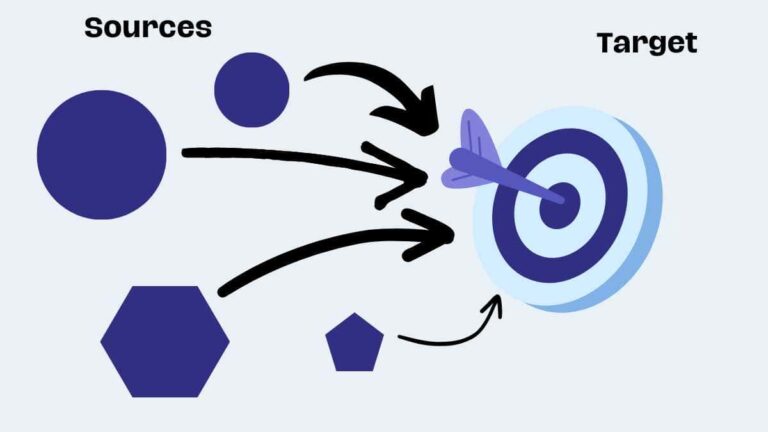
The founding paper for social impact theory was published by social psychologist Bibb Latané in 1981. The paper, titled “The psychology of social impact”, set forth three principles comprising a general theory/framework, leading to specific quantifiable and verifiable predictions. The principles are the social forces rule, the psychosocial rule and the multiplication versus division of impact principle. Social…
The Elaboration Likelihood Model of Persuasion

The Elaboration Likelihood Model was proposed by social psychologists Richard E. Petty and John T. Cacioppo in the early 1980s. They introduced this dual process theory to elucidate the processes that underpin how an individual is persuaded. The model emerged from their investigation into the varying effects of persuasive communications and the consistency of attitude changes. The elaboration likelihood model (ELM)…
What is Dual Process Theory

In psychology, a dual process theory explains how cognition can emerge in two separate ways or as a result of two processes. Often, the two processes are composed of an implicit (automatic), unconscious process and an explicit (controlled), conscious process. The origins of dual process theory likely go back quite far. For instance, Spinoza (1632–1677) distinguished…
Habituation vs Desensitization in Behavioral Adaptation

Habituation is a psychological learning process where there is a gradual reduction of a behavioral response following repeated exposure to a stimulus. It occurs when an individual learns to tune out a stimulus that is neither harmful nor rewarding after determining that the stimulus is inconsequential. An example of this might involve a person who initially…
Out-group Homogeneity Effects

The out-group homogeneity effect refers to the idea that people view members of an out-group as less varied than members of their own in-group. This perspective forms the basis for stereotypes, which are generalized beliefs about a group of people. For instance, one might believe that all employees in a certain profession share the same…